How to learn SAP EWM? How to start with SAP EWM?
My new blog post is the first installment in a series where I share non-functional and technical tips and ideas from roughly 15 years of experience as a Consultant for SAP EWM. These quick tips are tailored for SAP newcomers, whether you aspire to become a consultant or a developer. Additionally, they will be valuable for anyone who has worked with different modules and wants to delve into the world of warehousing. If you’re responsible for onboarding people to SAP EWM, these tips will also prove beneficial.
In case you are starting without any prior knowledge, it makes sense to follow the sequence of recommendations listed below. In case you already had some touchpoints, pick the ones that you missed so far.
1. Understand intralogistics/warehousing processes
Without a solid understanding of intralogistics and warehousing basics, becoming a successful consultant or developer for SAP EWM is akin to designing a car without ever having driven one. I do not recommend touching EWM without gathering this understanding.
While reading books and taking online courses (such as those on Udemy) can provide valuable knowledge, the most effective learning occurs through direct exposure in the real world. Consider internships or part-time work in a warehouse, ideally covering various areas from receiving to shipping. In Germany and Europe, warehouses are often in need of workers, even for temporary or part-time positions. And if physical activities aren’t your preference, simply observing warehouse processes and material handling equipment by spending time in a warehouse can also be a valuable first step.

2. Explore the SAP EWM Best Practices
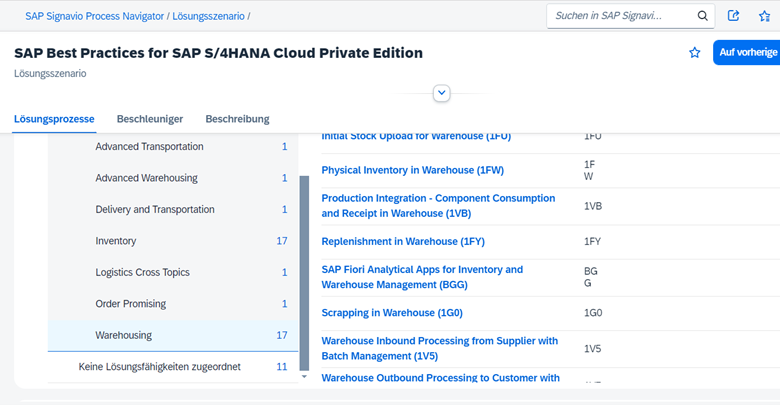
Once you have a good understanding of what is actually happening within a common warehouse from a physical material flow perspective, you are ready to engage with the system. Begin by working through EWM Best Practices before diving into any project-specific requirements. You can find the list of Best Practices, along with process flow charts and detailed click instructions, within the SAP Process Navigator. To access the navigator, you will need a S-User or at least a P-User. Click through the well-documented flows and connect what you read and see with your experiences gathered while working in a warehouse (so here, you connect the dots to step 1!). If you do not yet have access to an SAP EWM system, consider renting a cloud system to explore the best practices. Search for ‘SAP IDES system’ (International Demonstration and Education System) via your preferred search engine. You will find plenty of vendors that give you access to the latest EWM versions for around $150 per month.
3. Jump into your first projects
Having completed the foundational steps (including practical warehousing exposure and a study of the EWM Best Practices), you’re now prepared to embark on your first EWM project. While you won’t be a senior developer or consultant right away, you’re not starting from scratch either. Here’s what I suggest to consider while approaching your early projects:
- Education First: Treat your first 1-2 projects (especially within the first year) as part of your learning journey. Consider them an essential phase in your education.
- Adjust Your Rates: If you’re a freelancer or working for a service provider, be flexible with your rates. Recognize that these early projects are an investment in your expertise.
- Embrace All Tasks: Even seemingly mundane tasks have value. Don’t shy away from them. Working alongside experienced senior consultants or developers will accelerate your learning.
- Patience and Persistence: In the SAP world, trial and error are constants. Be patient, stay positive, and remember that every “error” contributes to your growth.


4. Study the theory
In contrast to the previously mentioned steps, this one should run concurrently, once you’ve started with your first project-related tasks. Once you’ve settled into a project and received work packages, it’s time to delve into the corresponding theory. I don’t advocate reading through this material before having an actual project to work on. Why? Because the details won’t truly stick until you can apply them practically.
Here’s how I approach it:
- Project-Driven Learning: Create a list of topics you expect to encounter in your projects over the next 12 months. These could be specific functionalities, processes, or challenges related to
SAP EWM. - Theoretical Exploration: Armed with your project context, search for theoretical content. Dive into SAP literature, explore relevant blogs, and watch educational videos (beyond my blog and YouTube channel, consider browsing through the SCM Community blogs, read through the relevant chapters in the SAP Press books about EWM or buy a licence for the
SAP Learning HUBto get access to theSAP EWMonline trainings).
As you learn, keep the connection to the real world at the forefront. Apply what you read or watch to the practical scenarios you encounter. The knowledge gained will be much more meaningful when you can directly relate it to your daily work.
With this last point, I would like to close this post. This summary – from my perspective - provides a concise and practical guideline for EWM beginners. While the intensity of each step may vary depending on your individual prior experience, the approach should serve as a valuable roadmap.
Always remember, becoming proficient in SAP EWM involves a blend of theory and practice. So, buckle up, embrace the learning journey, and soon you’ll navigate the world of warehousing with confidence!
📧 Newsletter
Get updates about new blog posts directly in your inbox.
▶️ YouTube Channel
Subscribe to my channel for regular tutorials & insights about SAP EWM.